I’m writing a novella inspired by Ottoman and Byzantine history, so I did what I always do and check out all the books from my library on the topic. Here are reviews for two of them.
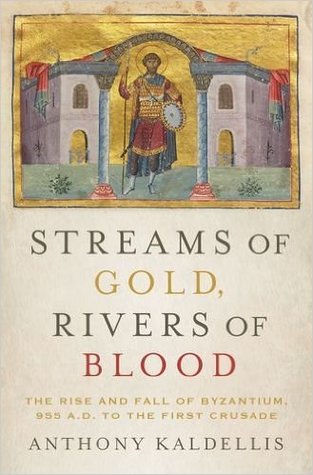
Streams of Gold, Rivers of Blood
This is a nonfiction book about the middle Byzantine period, between 955 and 1025. It starts in the rebuilding phase after the post-Justinian collapse, continues through the reign of Basil 2, and climaxes with the beginning of the Crusades. It’s about more than just Byzantium; it talks about the motivations of the various emirates and sultanates in Syria and eastern Anatolia at this time.
I did not finish this one. I read about 125 pages, or a little over 1/3 of the book. In short, this book got into the weeds of the year-by-year military campaigns of Rome, telling who is the suzerain to who, that sort of thing. I wanted the bigger picture. This is a good, well researched book, but it wasn’t what I was looking for at this point in time. This book was targeted more to scholars, than lay people interested in learning about history.
The Rise and Fall of the Byzantine Empire
This is a short, 50p book about the broad sweep of the Byzantine empire. It’s targeted at mainly children between the ages of 12 and 16. I thought it was fine.
What Life Was Like Amid the Splendor and the Intrigue
This is what I was looking for! This is a coffee table book, meaning it’s a large book containing both pictures and history. It contains a few fictionalized accounts of important people of Byzantine Rome: the reign of Basil the 1, Psellos the minister, the knight Mousoulis and Mehmed the conqueror. By describing these fictionalized accounts of these real people, the author brings life to the setting. For example, by describing some of the travails of Mousoulis, the author shows how the nitty-gritty details of what it’s like being a cavalryman in the tagmatic army. Or with Psellos, it shows how a low-noble lawyer can work his way up the ladder and have an influence on imperial politics.
This was a good book, and covered broad subjects. Due to it’s nature of being a picture book, it did a GREAT job of actually showing icons and religious imagery. It frequently had asides where it showed and describe various aspects of Byzantine culture by showing ancient artifacts, such as silver spoons or an ivory horn used during hippodrome races. I think this is what I liked best about this book, that it had so many asides about the cultural products of Byzantium.

 John Mendez- Book Reviews and More