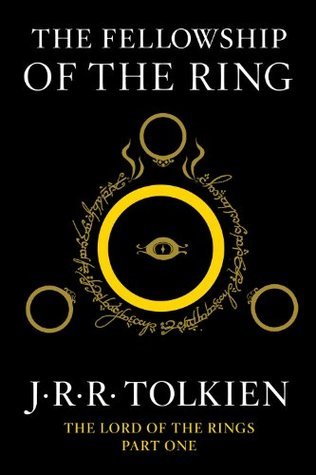
Goodreads Fellowship Towers King
I feel as though ‘The Lord of the Rings’ doesn’t need much of an introduction. It’s famous for being the grandfather of the fantasy genre. This series is really good, so LotR helped kickstart the genre in a great place. In some ways, the ‘grandfather’ status is bad: the tropes and tone Tolkien used in LotR was so influential that it dominated the genre, choking out the sun for other styles until the 2000’s. ‘Fellowship’ was published 1954; fifty years of genre domineering is insanely unhealthy.
Thousands of people have tried to re-create the soul which animated the original series, but no one ever quite managed to bottle lightning twice. Some got close, (I’d point out McKillip’s ‘Riddle Master’ trilogy, Chase’s ‘Edan’ trilogy and William’s ‘Memory, Sorrow, Thorn’), but none of them managed the alchemy of lead into gold. Lord of the Rings is a unique beast to this day.
Only in the last ~30 years or so has the genre been able to escape Tolkien’s coattails, thanks to new influential genres like Urban Fantasy, YA, Grimdark and Romantasy charting new waters. Heroic and Quest fantasy are becoming a rare breed, at least in the Trad Pub space.
For the longest time, LotR was required reading for a fantasy fan. These days, I bet a majority of fantasy readers have never read it. To a millennial/zoomer/Gen Alpha who grew up with ‘Harry Potter’ or ‘Hunger Games’ or ‘The Fourth Wing,’ ‘The Lord of the Rings’ will no doubt seem stodgy and outmoded. I’ve even seen people unironically say it’s bad. The genre has gone off to college in the big city, and grandpa Tolkien is left with an empty nest.
I’ve not read LotR in ~20 years. It’s been so long since my lead read-through, and I was so young when I read it, this will be a fresh experience for me.
(For the record, I love the subgenre of Tolkien Clones. I’ve read at least one book in the following series: Shannara, Belgariad, Riddle Master, Eragon, Wheel of Time, Dragonlance, Mistborn, Sword of Truth, Memory Sorrow Thorn, Bound and the Broken, Songs of Chaos, and more. I still read new Tolkien Clones every year. Needless to say, I’m biased in favor of this series.)
Lord of the Rings is a deeply Romantic novel. Here’s the definition from wikipedia.
Romanticism (also known as the Romantic movement or Romantic era) was an artistic and intellectual movement that originated in Europe towards the end of the 18th century. The purpose of the movement was to advocate for the importance of subjectivity, imagination, and appreciation of nature in society and culture in response to the Age of Enlightenment and the Industrial Revolution.
The Shire is an idealized recreation of the British countryside Tolkien grew up in, after he emigrated from South Africa. Gondor and Rohan are idealized recreations of Rome and ancient Nordic cultures. Mordor and Saruman represent the dangers of industrialization leading to dehumanization, while the elves, hobbits and ents represent a path of living alongside nature. The series has a melancholic tone, focusing on the end of an age and beginning of a new one, just as how the Romantic movement was a reaction against the Industrial Revolution and the social/environmental changes which went along with it. I could go on, but Tolkien scholars have written on this topic with greater nuance than I am capable.
Romantic novels don’t really gain acclaim in the modern fantasy community; to be sure they’re still occasionally being published, but they’re increasingly rare. Most of the books considered ‘essential reading’ in the modern genre community today discuss characters in terms of trauma, of social injustice, of economics; books feel like they’re written by someone who’s informed by Foucault. (Books by R.F. Kuang or N. K. Jemisin, as examples.) Writing books where the major theme was ‘the past was mostly good, actually’ is out of step with modern sensibilities.
A book having progressive political themes is not bad; I enjoy reading most of them. But you can’t say the Foucault-ness has not taken all the air from the room for the rest of the genre, at least in the trad pub side of the genre. Speaking only for myself, I’ve been so trained by the modern genre that I can’t now read a story with a monarchy the same way as I did twenty years ago. Romantic novels are passé.
On a thematic level, I appreciate the Lord of the Rings. It’s tone is countercultural to the modern fantasy genre; most books published these days tend to tear down the past. ‘The Hunger Games’ challenges the authority of a government; ditto for ‘Harry Potter,’ ‘Dresden Files,’ ‘A Song of Ice and Fire,’ and pretty much every book about underdog rebels fighting against a colonizing force/dystopian government/Big Bad Evil Guy. I can’t remember the last trad pub book where the status quo is presented as good.
Tolkien, on the other hand, strikes the tone of nostalgic fondness for the beauties of the past, but coupled with an understanding that the past is over and it’s time too move on. This series says that people with power should be trusted, but not trusted uncritically.
- Aragorn is a good guy, but he initially isn’t trusted. When Frodo and company first meet Aragorn in the Prancing Pony, they see only Strider, a scruffy character; it stands to reason they don’t trust the ranger right away.
- When they first meet Galadriel and the elves of Lothlorian, they are greeted with distrust; the Fellowship is forced to wear blindfolds, and Galadriel is portrayed as a terrifying sorceress.
- Initially the narrative frames Saruman as a person who should be trusted, which makes his treachery that much more vile. Same goes for Denethor and Grima Wormtongue.
I feel as though this series gets something of a bad rap; it’s detractors complain it has simple morality of ‘good vs evil.’ Upon inspection, it’s really about the difficulty of finding trust under extreme circumstances, and how people fall from grace too easily. There are some evil characters; orcs and Sauron, for example. But Gollum isn’t evil, and neither is Denethor, even if they are villains. I feel the series does a good job of exploring how morally GOOD characters can struggle with temptation; even Frodo fails at the end.
I’ll quote a post from this reddit thread, who says it better than I can say myself:
– I love the idea that Middle Earth is filled with many big brave heroes but none of them can carry the all-powerful ring precisely because their strength and savior tendencies will be quickly and easily corrupted. Instead the all-powerful ring is only safe in the hands of “simple” people who have no ambition beyond eating, drinking and being with friends and family. It’s a moving idea and it’s surprisingly subversive for such a foundational text of fantasy. Everyday people, widely considered weak and unimportant, are the only ones who can safely bear such incredible power. I find that a profound statement about how we perceive virtue and whose lives actually have it.
These days people whine that modern books/movies/video games have political themes; many such people point to masterpieces of the past, such as ‘Lord of the Rings’ as not having a political theme, and claims that lack of politics makes ‘LotR’ superior. That’s bullshit. Lord of the Rings deeply has such a political theme. It’s just so subtle and countercultural that most people don’t notice it.
And that theme doesn’t just end at Tolkien’s assertion that the common man has the potential to be more morally superior to the high-and-mighty. Tolkien famously asserts the value of pity and mercy when discussing Gollum.
“What a pity that Bilbo did not stab that vile creature when he had a chance!”
“Pity? It was Pity which stayed his hand. Pity, and Mercy: not to strike without need. And he has been well rewarded, Frodo. Be sure that he took so little hurt from the evil, and escaped in the end, because he began his ownership of the Ring so. With Pity.”
Pity and mercy are virtues essential for the function of a healthy society. The genre of Fantasy is redolent with combat; everything from ‘Fourth Wing’ to ‘The First Law’ glorifies violence. I find it darkly ironic that a genre so much in Tolkien’s shadow so utterly fails to understand the message Tolkien was trying to say.
People call ‘The Lord of the Rings’ staid and old fashioned, and perhaps it is. But sometimes you can learn a thing or two from the old fashioned, the traditional, the bygone. There is good social commentary in this series, and it’s a shame this series is falling out of fashion.
This series is a breath of fresh air. It feels like a work of art, created by an artist over many years. In comparison, many of the books published these days feel rushed in some way. Artwork needs time to cook; years, or even decades. I feel as though the modern genre suffers from the relentless need to have an author publish a book every single year for the sake of putting food on the table. (This was also true back in the day; I could point out a few Sherlock Holmes mysteries which seemed to exist solely for the purpose of making Doyle rich.)
Have you seen a Youtube video which was obviously scripted, filmed and published over the course of a day or two? And it feels rushed and messy? A lot of books published these days feels like ‘content;’ artwork produced to provide a quick thrill, and is quickly forgotten.
It’s clear Tolkien whittled away at this series for years and years, gradually refining it… something working authors can’t do because of the constant rolling deadlines. Just to be clear, I’m not calling working authors bad. Being able to write, edit, publish and market a whole novel in a single year is a hard skillset to master. And yet the saying goes ‘Art is never finished, only abandoned;’ most authors would be very happy to have more time to write their books. Perfection takes time, and most working authors don’t have time, hence why so much of what is published feels like ‘content.’
Caveat Emptor; one man’s ‘content’ is another man’s ‘high art.’ I understand many people will disagree with me that LotR is quality artwork, and that’s fine. I feel like this book’s semi-anachronistic prose is well done; you might disagree. (But I am a fan of mildly purple prose, so YRMV.)
People like ragging on Tolkien’s habit of including songs and poems in his storytelling, and indeed on my first few readings of the series I hated them. But this time I appreciate the songs and poems. After years of reading and reviewing hundreds of novels, I’ve become jaded. Reading a book which breaks out into song multiple times a chapter… it’s baffling. Who the hell writes a book with songs?! It’s so weird and quirky and fun. It’s the sign of an author who doesn’t take himself seriously, but at the same time is extremely skilled about not taking himself seriously.
And at the same time, the songs and poems help capture the mythic feel, the landscape and culture of Middle-earth in a way basically every other fantasy series fails at. What would the Lord of the Rings be without it’s music? Black and white, instead of painted with full color. Middle-Earth is a living place.
So, my thesis. When we take a step back and look at the genre of Tolkien-Clones objectively, we see many similarities. Quests to defeat a dark lord. Elves, dwarves and orcs. Travelling across a broad landscape. Monarchal/aristocratic tendencies. But when we drill down into the specifics of prose, dialogue and specificity of worldbuilding, I personally feel like grandpa Tolkien knocks it out of the park, and no one else comes close to matching him. I feel like a lot of Tolkien’s imitators wrote ‘content,’ but Tolkien himself wrote art.
The Bad
I’ll start with the structure. What is a story structure? It’s the overarching architecture of a novel/series. You’ve probably heard of the Three Act Format, or the Five Act Format, or the Hero’s Journey. And just being blunt, ‘LotR’ structure is bad… at least by modern standards.
Tolkien structured his stories in the vein of a mythic ballad, or a skaldic hymn, not the Three Act Format. That doesn’t mean it’s objectively bad, but it does mean that by modern standards it’s subjectively bad. How many times does the narrative dawdle about to talk with Tom Bombadil and Goldberry, or ambushes by the nazgul or barrow-wraiths or orcs or wolves, or whatever side-adventure? A lot. Mythic ballads such as the Odyssey are filled with such side-quests, but modern storytelling doesn’t generally encourage it.
I’m pretty sure Book 1 could be 20% shorter, and much less bloated, by simply cutting a few nazgul/orc attacks. I often complain in my reviews that modern fantasy books are bloated and need to be shorter; modern authors, rest easy knowing your intellectual forbearers committed the same sins.
Book 2 was structured into separate blocks. First Merry and Pippin’s story is told. Then Aragorn, Legolas and Gimli’s story is told. Finally Sam and Frodo’s story is told. I have mixed feelings about this. On one hand it let these individual stories to really marinate on their own and feel cohesive. On the other hand, we miss out on the climax of Merry and Pippin’s story because it happens at the same time as the Battle at Helm’s Deep. This is CLUNKY storytelling. This is ‘middle-book syndrome.’
Book 3 also separates the stories into separate blocks, for the first half. Then the second half of the novel blends the viewpoints. I feel like this book had the best structure of the three.
By modern standards, the characters in LotR aren’t that vivid. I can’t in good faith compare Aragorn to Kvothe, as an example; Kvothe’s personality just drips off the page, while Aragorn’s personality is stiffly characterized. And yet at the same time, I don’t think Tolkien wanted to write an ultra vivid, ultra nuanced character of the modern style. An angsty character a la the modern YA boom would be entirely out of place in Middle Earth. Again, the Lord of the Rings reminds me of mythic tales, where characters like Beowulf are discussed at an emotional remove. The characters aren’t objectively bad, but subjectively bad. If you want super compelling modern-style characters, you aren’t going to get that here.
I’ll offer an exception for Frodo and his struggles with the Ring. People have called the Ring as an allegory for PTSD or addiction, and I think the allegory holds up. We see in Frodo the gradual descent and corruption of a good soul into something unrecognizable, caused by forces which he cannot control.
Note that characters being angsty and ‘modern’ doesn’t make them automatically better. Too often I see authors throw some ‘morally grey’ on the canvas in an attempt to add depth to a character, failing to realize the wonderful works of art you can create with only black and white paint. Morally good paladins can be compelling characters.
And finally, this series has a theme of grief and renewal. With the end of the Third Age of Middle Earth, and the departure of the elves, ‘the Lord of the Rings’ series strikes a deliberately melancholic tone. Forgive me for getting personal, but I’ve been personally having a rough time these last few years. I’ve been having some fairly major health struggles, and my dad just died after several years of intense decline. As a result I’ve been emotionally in the dumps.
I’m not usually one for weeping while reading books; I’ve read so many books at this point it takes a lot for me to care. But I shed a few tears near the end of ‘The Return of the King’ when the Fellowship reunited and Aragorn and Arwen wed. I personally needed the hopeful note this series ended upon.
A Comparison to the Movies
I can’t help but bring up the Peter Jackson movies; I’ve seen them a million times. Now that I’ve read the book as an adult, I have to say that a) Jackson did an amazing job adapting the book to the movies, somehow purifying it’s essence down and putting it on film, b) the books are broadly better than the movies c) the movies are better structured than the books and d) the actors in the movies did a great job adding life to characters, while staying true to the characters in the book. Talk about a masterclass in cinema.
That said, a lot was lost in translation from book to screen. I keenly feel the absence of the songs and poems. I understand it would be cringe to have characters break out into song every fifteen minutes, but… damn it, I now want a LotR musical, and I’m only be slightly facetious.
(And also Faramir and Denethor were done dirty in the movie. I get why Jackson made the changes he did, but it was still a massive change from the book, and not for the better.)
I will say that there were some changes from the book which I feel strengthened the story, or at least were net-neutral changes. For example, ‘The Scouring of the Shire.’ ‘The Scouring’ segment was a good read, but I also like how when the Fellowship returned to the Shire in the movies and everything was the same. It really struck home how much the four heroes had changed, because they no longer fit in, really bringing home the theme of military characters coming home changed/emotionally damaged.
Audiobook notes
I did something called ‘immersive reading’ for this series. I read the paper version of these books, and at the same time listened to the audiobook. I find that I can read faster this way, and absorb what I’m reading better. HOWEVER, if you choose to do this, make sure the edition of the paper version and the edition of the audiobook are the same. I read an early edition of the book, and listened to more modern audiobooks, and it is clear that they were different editions. Word choice between the two was frequently different, with minor changes here and there. I guess Tolkien went back and made changes over the years.
I listened to the Ingles version of ‘Fellowship,’ the Serkis version of ‘Two Towers,’ and the Phil Dragash version of ‘Return of the King’.
- I found that Ingles felt the most mystical of the three, adding more of a fairytale/High Fantasy ‘vibe’ to the book.
- Serkis does a better job of voice acting instead of just narrating. Additionally, of the three I feel like this had the best sound quality for the voice. Serkis’ rendition of Gollum was absolutely peak (obviously), but I didn’t like Serkis’ rendition of Aragorn.
- I personally enjoyed the Dragash version the most, due to the addition of sound effects and music. It was clearly a passion project. Dragash’s Gandalf was quite good, same with his Merry and Pippin. However, I felt that the music occasionally overwhelmed the narration, once or twice an hour or so.
All three are good, if not great. But whenever I return to read this series, I think I’ll listen to the Dragash version. Of the three, only the Dragash version made me stay up late reading; only the Dragash version made me want to slip in an extra hour here and there throughout the day.

 John Mendez- Book Reviews and More