I’m gonna talk about the state of the industry for a minute, then get on to Cradle. Skip ahead a few paragraphs if you want to skip a rant.
Adventure series with 5+ novels have been a feature of the genre since the beginning. Shannara(1977), The Wheel of Time(1996), Temeraire(2006), the Dresden Files(2000), Paksenarrion(1988), the Shadow Campaigns (2013) and Cosmere (2005) are examples, and I can easily name thirty more series. A decade ago, you couldn’t walk through a library without tripping over a new 5+ book series.
Times change. I can think of only two traditionally published, five book series which debuted in the last decade: Murderbot (2017) and The Sun Eater Saga (2018). (Can you think of any others who debuted in the last decade? The closest I can think of are Empyrean and The Locked Tomb, but they’re not fully published yet.) Where once many-book series were commonplace, trilogies have become common… and increasingly trilogies are being replaced with duologies, and even standalones. Big series are an endangered species in the trad pub space.
These changes happened for a variety of reasons: the mass market paperback is dead; the midlist author is hollowed out; authors whose debut novels sell poorly often can’t find someone to publish another novel, where in earlier years they’d get another shot. The publishing industry now pursues the absolute maximum of profit to benefit the shareholder to absolutely self-destructive levels, leading to risk-avoidant behavior, trend-chasing and group-think by the industry. Massive series are risky, so they got cut.
Unprofitable books and genres can’t exist in this context. Hell, even moderately profitable books can’t exist in this context; I’ve heard horror stories of books making enough money to pay out royalties (this means the book was profitable), but publishers refuse to buy another book from that author because it wasn’t profitable enough.
This industry has always been rough, but it’s getting bleak. It’s a running joke in the industry that people are have been predicting the industry’s imminent downfall for decades, but it’s not died yet. That said, the industry is more unhealthy than I’ve ever seen it before.
I mention this to explain that I’ve decided to start reading more self-pub, simply because self-pub is where the genres I like to read are now being published. Trad pub still occasionally produces excellent stories… but I mourn the genre of my youth. The things I fell in love with are functionally extinct, culled by the drive for endless profits.
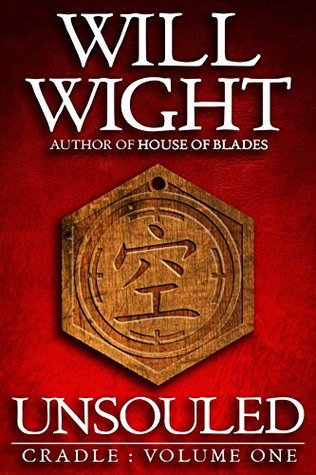
‘Cradle’ is a 12 book, self-published progression fantasy series. (It also has a 13th book, a fun anthology collection which you can read after the fact.) Progression Fantasy/LitRPG is the big thing in the modern adventure novel space, so I’ve decided to give it a try. LitRPG/ProgFantasy is a genre inspired by a combination of: tabletop and computer gaming, where heroes fight monsters, gain experience and level up; and Chinese Daoist Cultivation literature, where heroes go on adventures, drink potions, and become stronger to fight gods and demons. LitRPG generally makes the ‘game-y’ aspects of the genre part of the actual text of the narrative; Progression Fantasy keeps the ‘game-y’ aspects of the genre in the subtext. LitRPG is severely underrepresented in the tradpub space due to the previously mentioned extreme levels of tradpub groupthink.
Finally, because this is a genre is almost entirely self-published, the editing of this genre can be a bit touch-and-go. This is a genre created by amateur enthusiasts, for other enthusiasts. Even the best, most highly praised works in this genre have the occasional editing imperfections.
I attempted to read Cradle once before, and bounced off after reading two books. To summarize why I dropped the series after reading the first two books, it was my first time reading this genre and this genre is a bit of an acquired taste. I had yet to develop a taste for that ‘game-y’ flavor, so naturally I was not sold when I dove in head first. After I read and enjoyed the first Dungeon Crawler Carl book, I said ‘wth’ and tried Cradle again. Sure enough, I enjoyed it now that I gained that acquired taste.
Okay, let’s start.
DETAILS
- Anyone 12+ years old
- LitRPG/Progression Fantasy
- Asian inspired setting
- Martial arts magic
- Slow burn romance. And by slow, I mean sloooow. They kiss for the first time in book 9.
- Found family
- Quest fantasy/Chosen One fantasy
CONCEPT AND EXECUTION
The concept of this series is: Lindon is a weakling from a backwards hinterland; his family despises him and his hometown treats him with contempt because of his weakness. After Lindon impresses a wandering goddess with his bravery, Lindon must go on an adventure, growing stronger through the use of qi magic (though it’s called madra), in order to save his planet from a prophesied catastrophe. In his travels, he makes great friends and together they take on the entrenched evil factions causing his homeworld to stagnate.
The concept is a variation of the old ‘shepherd farmboy goes on an adventure’ Chosen One storyline.
The execution of this storyline is mostly good, but a bit slow and grindy in places. On one hand, I appreciate that the author ‘show, don’t tell’ the training sequences his heroes go through, because they add weight to the combat when the combat does happen; this is Cultivation Fantasy, and I think training sequences are kinda expected in the genre. On the other hand, the training sequences/cycling madra/meaningless busywork in every book bogged down the plot. Most books could have been 10% shorter (or more) if they trimmed out some of the fluff.
Overall, the author successfully created a fun series, with a bit of fluff around the edges.
CHARACTERIZATION
I’ll start with the good.
Lindon is so passive other people step on him. Yerin dominates every conversation, just as she tries to dominate the battlefield. Eithan is silly, but he has hidden depths of power. Mercy is kind. Dross has a droll sense of humor, often telling bait-and-switch jokes. Zeil struggles with depression and self-worth issues. Malice is… malicious. I could go on, but you get the point.
The characters have clear characterization. I could point to several hundred novels where the authors fail to establish distinct dialog voices for different characters. Not here; you can remove the dialog tags for pretty much every important character in this book and you can immediately guess who is who.
Now the bad.
Almost all the characters are very blunt. These characters are well defined and nuanced, but I would have expected more nuance given this is a 12 book series.
- For example, I like Lindon’s nuance: he has extreme self confidence issues, caused by being raised by unloving parents.
- This self-confidence issue plagues him throughout the series. Every time I heard him apologize, I couldn’t help but think of how his family undermined his personality growing up.
- However, he’s the main character in a 12 book series. Couldn’t we get a few more personality tics halfway through?
- Yerin had similar nuance, with her struggles to escape the shadow of her mentor the Sword Sage and establish her own identity… however Yerin’s internal struggles ended sometime around book 8, with the resolution of the Ruby storybeat. In books 9 through 12, her character growth stagnated.
- Mercy had a lot of unresolved mother issues… but the resolution of which were backloaded to the final books in the series. Her character growth stagnated between books 4 through 11.
To summarize, the characters in this book are well defined. However, the character arcs weren’t the best. That’s fine; if I were to pick one, I’d rather read a book with clearly defined characters as opposed to evenly spaced character growth. And honestly I don’t think it’s fair to demand an author have evenly spaced character growth for an ensemble cast throughout a 12 book series; that’s a lot of balls to juggle.
PLOT
MILD SPOILERS BELOW
The planet of Cradle exists in a multiverse called the Way. Martial artists, called ‘sacred artists,’ can grow so powerful that they can transcend their Cradle and travel to the wider Way, where they become warriors for peace and justice.
Lindon is born the weakest sacred artist imaginable, in the weakest corner of his planet, to parents who hate him. The only advantages to his name is absolutely insane stubbornness, and the ability to befriend literally anything. He and his friends go on a series of adventures, gathering powerful artifacts, drinking magical potions, levelling up, defeating dangerous enemies, with the ultimate goal of saving the world from the threat of chthonic monsters and tyrannical god-emperors, called the Dreadgods and Monarchs.
His biggest enemy is time: with every day which passes, the Dreadgods are one step closer to eating his home.
Each individual novel’s plot vary in quality: I love the plot of Ghostwater, Bloodline and Reaper, but I found the plots of Unsouled, Skysworn and Blackflame to have good moments but ultimately lacking. Here’s my conclusion: the books I enjoyed more were the ones with a more traditional Fantasy plot, while the ones I enjoyed less relied more on Progression Fantasy tropes of training, preparation and fighting many small battles before fighting a big battle at the end. It’s like a good soup: some salt is delicious, but too much salt spoils it.
But overall, the series’ plot is good. I liked the twist that the Dreadgods draw power from the Monarchs, as a sort of balancing factor against the Monarchs; to save the world from the Dreadgods, you must first kill all the Monarchs/send them to the Way. The tension at the heart of the last few books was very compelling, when the heroes made fought battles against one-time-allies.
In addition to being an adventure story, it also has a small amount of politics going on in the background. Most of the important antagonists are royalty: Reigan Shen, Malice, Sha Miara, the Golden Dragon Seshethkunaaz, Northstrider, the Eight-Man Empire and Emriss are all Monarchs. Over the course of the story, the heroes must form alliances with and against pretty much all of the Monarchs at different points. For the heroes to win, they have to defeat not only the Dreadgods, but also the Monarchs.
In the ‘Dragon Age’ video games, monstrous events called Blights regularly occur, requiring all non-evil factions to team up to stop it. However the non-evil factions don’t want to team up: if you lose your army fighting the Blight, chances are after the dust settles you’re going to lose a war against another non-evil faction when they invade you while you’re weak. Everyone wants the Blight to end, but no one wants to fight the Blight. Thedas has the appearance of a traditional D&D/Tolkien setting, but with realpolitik.
Ditto in Cradle. Everyone wants the Dreadgods to go back to sleep, but no one wants to actually fight them because chances are another Monarch will swoop in and take a chunk of your empire when you’re busy saving the world. Realpolitik is a factor in the actions of the various Monarchs. This, in theory, is a neat storytelling mechanic for the series.
In practice, ‘Cradle’ didn’t focus on realpolitik. There was a little scheming here and there, but I wanted more. Spoilers: at one point, the hero’s Monarch patron switches from being Malice to Emriss, because Malice is against the Monarchs all being killed/forced into the Way, while Emriss is in favor of it. I feel like Emriss was barely a character in this series; she got at most one or two POV chapters in the series, compared to the five or six that Malice, Reigan Shen and Northstrider got. The political scheming aspect of the series would have improved if characters like Emriss got more attention.
(Oh, and it’s a shame that the Silent King didn’t get an entire novel focused on him and his mind control. I’d love to read a Manchurian Candidate story about the heroes desperately trying to find a mole sent on a mission by the Silent King to assassinate Emriss. The Silent King was the coolest baddie in the series, and he barely got any pagecount.)
AUTHORIAL VOICE
‘Cradle’s’ prose is beige. I prefer stories with a more embellished style; other people might say that the books I enjoy are purple prose. I would compare ‘Cradle’ to Sanderson’s beige prose: easy to read and without much zing to it. This style of writing is approachable to just about any level of reader.
I recently re-read the Lord of the Rings trilogy, and in that series the tone of the prose served to help add drama to the narrative. Tolkien used a somewhat archaic writing style to help evoke a fairy tale or Arthurian myth. The LotR narrative felt like it was from a different time and place; an ancient insect preserved in amber.
If I were to fault ‘Cradle,’ the beige prose didn’t really add anything to the narrative. It felt modern, not trying to capture a mythic or fairy tale feel. TBH, as someone who enjoys purple-ish prose, this is the aspect of this series I struggled most with.
THEME AND MESSAGE
‘Cradle’ didn’t try to be ‘artsy literature,’ by telling any themes or messages… and I think that’s good. I can complain a lot about many authors ambitions at being artsy exceeds their ability to actually create artistic messaging. On the rare occasion ‘Cradle’ accidentally brushes up against a theme or message, it never feels preachy because the plot is entirely grounded in the worldbuilding. Here’s what I mean.
The planet Cradle has a survival of the fittest ethos because this is Cultivation Fantasy: the characters compete, duel and go to war with one another over rare resources required to ‘level up.’ As a result, the tenor of the novel takes on an almost exploitative note.
- In book 2 Jai Long enslaves people to create scales, to help him level up.
- In book 6, the Blackflame Empire and the Sheishin Kingdom go to war over natural resources used for levelling up.
- All the Monarch sacred artists have the option of leaving Cradle to travel the Way. But they have chosen not to follow the natural order of travelling the Way; instead they stay on Cradle, founding empires, using their godlike power to control and exploit the people.
Innocent people suffer due to the powerful seeking domination. So naturally when the series discusses the message of ‘the powerful dominating the weak is bad,’ that message doesn’t feel shoehorned in; the message feels like a natural outgrowth of this being Cultivation Fantasy.
Additionally, the series used a repeated theme of parents abusing their children.
- Lindon was the unloved child, while his sister was a favorite. His family gave his sister valuable levelling-up resources, while neglecting Lindon. As a result he has extreme parental neglect issues.
- This becomes a storybeat in later novels; when his parents return as characters in book 9, we see Lindon psychologically break down because he’s still not earned their love, even though he’s levelled-up to the point that he’s the strongest person in Sacred Valley.
- Mercy was the golden child of her mother Malice… and along with that status came vast expectations. When Mercy fails to live up to those expectations, Mercy is cast down and treated horribly. This happens to Mercy more than once. Her mother’s love always was conditional.
- After reading book 12, I get the feeling that Malice was trying to live vicariously through Mercy. As a result, when Mercy acted ‘imperfectly,’ it infuriated her mother because Malice wanted Mercy to fit into a perfect little box. Malice treated all her children like dolls and servants, while using the excuse of ‘you must do what’s best for the family’ as an excuse to punish disobedience.
- Yerin is the adopted daughter of the Sword Sage. After her adoptive father the Sword Sage dies, Yerin’s adopted mother the Winter Sage starts trying to mold Yerin into an exact duplicate of the Sword Sage. Yerin only is able to thrive when she turns her back on the legacy of both the Sword Sage and Winter Sage and starts living her life for herself.
On a final note, none of this thematic messaging is super-complex. This series is entirely appropriate for someone 12 to 15 years old (but as a 35 year old, I enjoyed it too). I think this series would be a good starting off point for someone just getting into the genre.
WORLDBUILDING
The setting feels weird, if you’re used to more traditional fantasy settings like Dungeon and Dragons/Tolkien/Sanderson. Cradle runs off a wuxia martial arts magic system. So instead of chanting a spell and pointing a wand to have an effect, you have to practice channeling your Madra(qi) and learning various martial arts forms to have a magical effect. I’d compare it to Avatar: the Last Airbender.
I like it when a series shows non-combat uses of magic, because that non-combat can tell a lot about a culture.
- For example, in ‘The Stormlight Archive,’ spren magic is used both for fighting, but also for creating objects like spanreeds. Spanreeds allow long-distance communication. Due to the existence of spanreeds, we can tell that long-distance politics is a important, because this civilization developed tools to manage it.
- Cradle hints to the fact that the sacred arts can be used in non-combat ways, such as for healing or making crops grow, but that non-combat use is never featured. As a result, the setting of Cradle feels a bit shallow. I wish one (or all) of the main characters had non-combat uses for their magic.
Almost everyone in Cradle is obsessed with levelling up their martial arts magic (called the sacred arts). They are so obsessed, that it fosters a competitive spirit amongst everyone. Tournaments and duels are commonplace. Honor culture reigns supreme. This is the whole point of the Progression Fantasy subgenre.
SUMMARY
It’s been years since I last read something so crunchy. I can’t say this is the best plot I’ve ever read, or the best written prose, or best characters, or best worldbuilding. However, the series does a cromulent job for all of the above; it’s one of the top 10 series I’ve ever read. I miss the days when the fantasy genre would have multiple series on this level being simultaneously published through trad pub. I’m gonna read some more LitRPG and Progression Fantasy/Cultivation.
If you want to read this, just be aware that the series only becomes good in book 3, and the first truly great book is book 5.

 John Mendez- Book Reviews and More