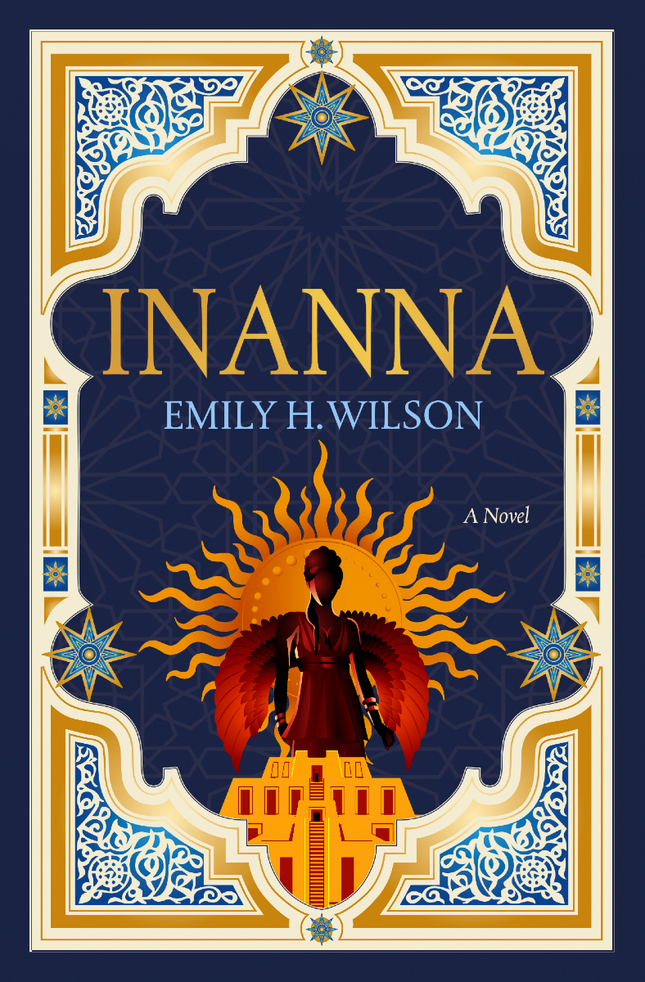
I got this ARC for free from the publisher for the purpose of review. I enjoyed my time reading this, and knocked it off in about an afternoon. If I were to describe this, this book is a retelling of the legends of Inanna, Gilgamesh and Ninshubar in a single book, winding together three storylines in a holistic and well-written combination.
Spoilers Below. I’m writing this review in good faith, as one author reviewing another’s book, trying to balance positives with negatives.
WHAT IS THE TARGET AUDIENCE? WHAT GENRES? WHAT MAJOR TROPES?
- Mythological reinterpretation
- Retelling the Epic of Gilgamesh and Inanna’s descent into the Underworld
- Historical Fiction/Historical Fantasy
- Adult. This book has ritual sex and rape.
- Stone Age, Bronze Age tech level. Characters use both stone weapons, and bronze armor.
MY EMOTIONAL RESPONSE/ FUN FACTOR
I read this book in basically a single afternoon, so it’s safe to say I enjoyed it. This is a competently written tale about Sumerian myth, a particular mythology you don’t see very often in modern Fantasy genre literature. It had a few flaws, which I’ll discuss later, but overall I am overjoyed to have read it and can easily suggest you read it too if it sounds interesting to you.
WARNING! QUIT READING NOW UNTIL YOU FINISH READING THE BOOK!
SIMILAR BOOKS
- Circe by Madeline Miller
- Black Sun by Rebecca Roanhorse
CONCEPT AND EXECUTION
This book’s concept is ‘Fluidly meshing the Epic of Gilgamesh and Inanna’s Descent into the underworld, in a modern psychological character-based story.’
I think this book was executed fairly well. I have to say that I REALLY LIKED the reinterpretation of the Epic of Gilgamesh for the first half of the book, and I REALLY LIKED how the book climaxed with Inanna’s Descent into the Underworld in the second half of the book. I liked, but didn’t love, how Gilgamesh’s plot ended, or Ninshubur’s plot in general.
Overall, I feel this story is well worth reading.
CHARACTERS, CHARACTERIZATION AND DIALOG
I have to say that this book has Inanna as the main protagonist, however Gilgamesh was my favorite character for the simple reason he was a walking disaster.
Going back to the original myth, Gilgamesh is a proud and wicked king of Sumeria. He takes what he wants, he kills who he wants, he has sex with who he wants. This book reinterprets this by making Gilgamesh a warlord who is able to seduce every women he meets. But because Gilgamesh is such a screw-up, he constantly gets in trouble for his affairs. I liked this reinterpretation, because it modernizes and humanizes a bloodthirsty character of myth.
Inanna in the original myth is a proud and noble character, who descends into the underworld to gain the vassalage of Ereshkigal, the queen of the dead, so Inanna might become Queen of the Universe. In this, Inanna is the extremely young goddess caught up in the political machinations of a squabbling pantheon in it’s death-throes. Her descent into the underworld is reframed as an attempt to flee her abusive marriage… but in the process she befriends Ereshkigal and becomes Queen of the Universe.
The third protagonist is Ninshubar, and I’m afraid I don’t know her original myth, so I can’t complement it. I did like her story though, she had some good scenes.
Overall, I liked how this book took the original myths and reframed them slightly to create something more modern.
Was it perfect? No. I feel like the second half of Gilgamesh’s story never paid off.
In the myth, Gilgamesh becomes terrified of death after his friend Enkidu dies. Craving immortality, Gilgamesh goes on an increasingly dangerous set of adventures to gain eternal life. In the end he fails, but learns an important lesson in the process about how you can’t live forever but you can do good deeds and those deeds can outlive you. He stops being wicked as a result of gaining this wisdom.
In this book, Gilgamesh never becomes terrified of death. He still goes on adventures to gain eternal life, but because he’s not terrified by the prospect of dying the adventure feels narratively unmotivated.
Finally, the gods in this weren’t very godly. They never did much supernatural.
PACING AND STRUCTURE
I felt the book was well paced, broadly. No notable lagging parts, and there were a few very compelling scenes. One of my favorite was a king’s burial, when he was buried with his favorite servants so he might have servants in the afterlife. Inanna’s friend was one of the servants, but she could do nothing but watch as her friend was killed. I feel like I’ll remember that scene for a while.
AUTHORIAL VOICE (TONE, PROSE AND THEME)
The author’s voice reminds me of a combination of Madeline Miller’s ‘Circe’ and Rebecca Roanhorse’s ‘Black Sun.’ There are multiple protagonists who all are set against a vaguely mythological/fantastical setting, as they try to come up with solutions for the problems at hand.
The prose is functional, and at moments stark. The prose itself reminded me of the Late Stone Age setting by being direct and forceful.
SETTING, WORLDBUILDING AND ORIGINALITY
This is a Sumerian setting, with the characters of Gilgamesh and Inanna as protagonists. It retells their tale. I felt it was well done, and broadly captured the setting well. Needless to say, this is a fairly original tale and well worth reading for this aspect alone.
SUMMARY
This is a good book. I suggest you read the myths first and compare the two and see what you think.
Did you like this critique/review? Here are some more: The Rest of My In Depth Reviews

 John Mendez- Book Reviews and More