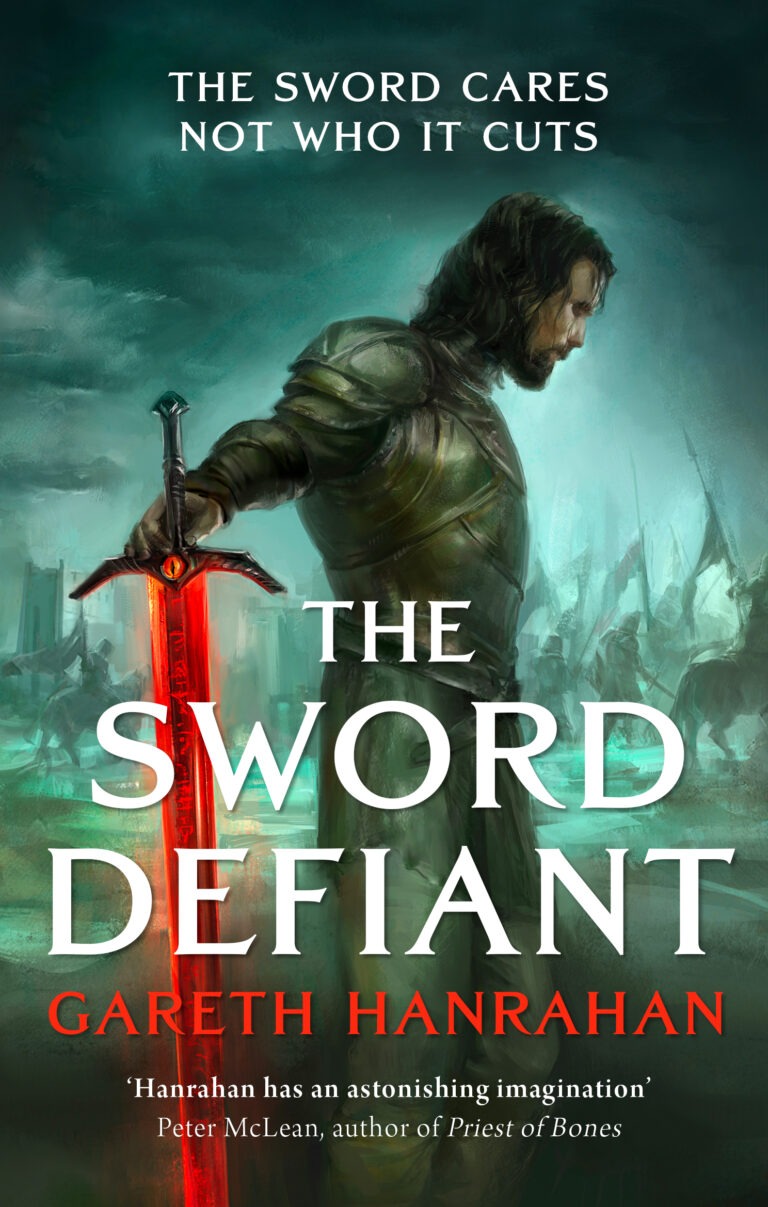
I NEEDED this book. I’m coming off a string of almost six months of bad to average books. I was trying to read popular, award winning fantasy novels, and was broadly disappointed. Even the good books I read frustrated me a little. I just checked, and this is the first, fresh 5 star book I’ve read in almost six months. ‘The Sword Defiant’ broke that losing streak and satisfied me completely. It’s not perfect, but it was a whole meal.
This book asks and answer the question: What happens after the Dark Lord falls? His armies of fell creatures are scattered, and his dark citadel is occupied. The Nine adventurers who triumph over him are left to pick up the pieces of a shattered world. The heroes won the war, and now have to win the peace.
Before we begin, do you have a book which needs editing? Do you want to read more reviews? Check out my blog if you’re interested.
WHAT IS THE TARGET AUDIENCE? WHAT GENRES? WHAT MAJOR TROPES?
- Epic fantasy
- High fantasy
- Grimdark
- Tolkienesque, but after the Dark Lord falls.
- Evil sword
- Political fantasy, with many warring factions with clear motivations and mutually exclusive goals. No side is entirely ‘morally good.’
- Middle aged fantasy. It stars two protagonists who are slightly past their prime
- Alf is an expert swordsman. At the climax of the war, he killed the Dark Lord. Twenty years later, he’s started slowing down.
- Olva is Alf’s middle aged sister. Her son has gone missing, kidnapped by a slaver who sells to vampire elves in the evil horde. She must save her son before he gets eaten.
- Good prose
MY EMOTIONAL RESPONSE/ FUN FACTOR
I entered this book frustrated, having just come off a six-month string of disappointing books. I mention this to explain the mood I was in; after reading a lot of books which weren’t to my taste, I needed comfort food.
‘The Sword Defiant’ is a meat-and-potatoes, plot focused novel with intricate narrative and fast pacing, with a bit of delightful pulp. It takes traditional fantasy tropes, and plays them straight in some ways and inverts them in others. It made me think. It never talked down to me like I was stupid, but instead actually explained the situation like I was an adult and expected me to draw the correct conclusions. It foreshadowed events clearly.
In other words, comfort food. But well-prepared comfort food, from an expensive restaurant. Like I said above, I NEEDED this book. I wanted something hearty to chew upon, and this was exactly that. While I don’t think this book is a typical an award winner/nominee, it’s prose/plot/pacing/etc are among the best that I’ve read in six months.
It’s not perfect; I felt the characterization was lacking and depending on tropes. This book is VERY MUCH SO a Tolkienesque. It relies heavily on tropes like the adventurer wizard, the adventurer elf, the adventurer dwarf, and so forth. I did not feel like the characters (beyond Alf and Olva) really set themselves apart from genre baselines. You have to be informed of/like the Tolkienesque genre to really appreciate this.
And I was pleasantly surprised by Olva. She’s a middle aged woman protagonist; you don’t get them very often in this subgenre. If you’re in the mood for a mom on an adventure to save her son’s life, check this out.
At first, I was inclined to give this 4 stars, but I enjoyed the climax enough to upgrade this to 5 stars. This is the first 5 star book I’ve read in the last six months (not including re-reads). I would not be surprised if this is winds up being the best book I read this year, or is in the top two or three.
WARNING! QUIT READING NOW UNTIL YOU FINISH READING THE BOOK!
BIASES STATED
To put this review/study in proper context, you must know my starting point.
I like the Tolkienesque genre. I read four or five books about adventurers going on quests a year. I value when these books play the tropes straight most of the time, but twist them in unexpected ways in others… in other words, exactly what this book does.
SIMILAR BOOKS/OTHER BOOKS IN THE SERIES
- I’d point you to ‘The Lost War’ by Justin Lee Anderson, for a similar genre and tone.
CONCEPT AND EXECUTION
The book’s concept is: the heroes led an army called the League to defeat the Dark Lord after a traditional fantasy adventure. They took over the Dark Lord’s kingdom. Now the adventurers must figure out how to re-integrate the evil hordes back into society as a whole. They won the war; now they must win the peace.
- The evil elves resent being ruled by dwarves, humans and good elves.
- The homonculi need to have their birthing vats constantly repaired and maintained. However, the good races are disinclined to allow such evil technology be repaired.
- The wilding barbarians are constantly on the verge of war with just about everyone.
The adventurers now must balance the needs of their conquered people with those of the League, who demand tribute from the evil hordes. If the Nine demand too much tribute from their barely-conquered evil hordes, then the hordes might rebel. But if the Nine don’t give enough tribute to the League of Good Guys, the League might invade again, this time deposing the Nine instead of the Dark Lord.
- The dwarves have a massive chip on their shoulders, because the evil horde almost destroyed their civilization in the war.
- The good elves, who once helped the Nine fight against the Dark Lord, established an economic blockade on the Nine and their city of evil. The good elves want to subjugate the evil elves once and for all.
- The human kingdoms are falling back into corruption and squabbling, sending merchants and looters to rob the Dark Lord’s fallen laboratories for trinkets. Making it worse, one of the Nine started a heretical cult and is now an apostate to the human religion.
This book has a fantastic innate tension, where the different factions involved are constantly clashing with one another for resources and over ethics. A war can start at a drop of a hat.
Making it worse, one of the Nine stole the bones of the Dark Lord… and with his bones, it’s possible to resurrect him. It’s anyone’s guess who the traitor could be.
- Is the traitor the wizard of the Nine, who has gone a bit crazy, is now dwelling in the Dark Lord’s tower and cosplaying as the Dark Lord himself?
- The shapeshifter of the Nine is MIA, having disappeared in suspicious circumstances; could he bring the Dark Lord back?
- The rogue of the Nine is neck deep in the slave trade and smuggling in under-the-table deals; is she conspiring with the evil elves bring back their Lord?
This is a great concept for a book. Factions as far as the eye can see! Interpersonal conflict resulting from dual loyalties and competing motivations! Everyone is trying to prevent another war, but maybe it can’t be avoided! Plot twists ensue.
Yeah, I’m a sucker for exactly this sort of political fantasy book. I thought this book was well executed.
CHARACTERS, CHARACTERIZATION AND DIALOG
As stated above, the characters are a bit tropey. The elf princess felt like a female Legolas who does politics as a hobby. The dwarf warrior was a generic Gimli. The wizard was Raistlin but with even less social skills (I have no clue how it’s possible to have even less social skills than Raistlin, but Blaise managed it).
Being tropey isn’t bad. Readers have favorite genres in part because of tropes. I enjoy this sub-genre in part because of the tropes. But, generally, tropes should be a launching off point, not an end point for a character’s personality. I felt like this book did a good job of almost giving these characters distinct personalities. I PLAN ON READING MORE IN THIS SERIES, so I feel hopeful that these characters will have time to develop those personalities in future books.
And some of the characters are genuinely good!
Alf is struggling with the burden of war. He’s killed so many people, seen so much death in the bowels of the evil city of Necrad, he’s suffering from some sort of depression or mental disorder. Making it worse, he has a talking evil sword which is encouraging him to do all sorts of evil. But he doesn’t do evil, because he’s morally upstanding. Indeed, he’s debating abandoning the sword entirely and going off to start a new life somewhere less depressing.
I also liked Olva. She’s a middle-aged mom of an adult son. When her son’s kidnapped, she has to go on an adventure to save him. I didn’t feel like Olva was as fleshed out as Alf, but again this is book 1.
And finally, Alf’s sentient sword Spellbreaker. Spellbreaker is a demon trapped in a sword. He gives the heroes advice sometimes, and at other times is stubborn and refuses to be useful. I liked when he poked fun of the protagonist, encouraging him to fight. Sometimes the protag would fight, but other times not; it was clear Alf valued the demon’s insight, even though the two characters are on opposite sides of the good/evil spectrum. I won’t call them friends; Alf knows the demon is evil and doesn’t trust him. However, Alf and the demon had a fun rapport together.
PACING AND STRUCTURE
This book has slow pacing for the first 60%, and picks up in the last 40%. It was initially slow to set up the world and characters, to introduce the reader to the narrative. This is good, and bad.
It’s good, because this book did a good job of using that time effectively to introduce the many factions and characters. It used that time to ‘show, don’t tell’ how different factions squabble with one another. The beginning of the book felt ‘natural,’ and well told.
It’s bad, because if a book is too slow, readers will disengage. I am of the opinion that most books in this genre start slow, so a reader of this genre has to be willing to buy into slow starts. However, I felt this book was initially too slow.
I think this book had a four act structure. Spoilers below.
- Before the Discovery
- Alf wanders the land, listless. He’s a broken man after a lifetime of war, but can’t put down the sword to find peace. He’s called upon by an old friend, Jun, who delivers a prophesy of danger.
- Bor comes to deliver Olva money; in the process Bor inspires Olva’s son to run away.
- After the Discovery
- Alf discovers that the Dark Lord’s bones have been stolen. This is BAD NEWS, because with the bones someone can resurrect him. Alf must covertly ask questions of the Nine, trying to find which one of them stole the bones.
- Oops! Lath of the Nine is discovered to have a resurrection ritual!
- After running away, Olva’s son is kidnapped by slave traders. She sets off on a journey to save him. She guilt-trips Bor into helping her.
- Bor sells Olva into slavery at the first opportunity.
- Blaise reveals the truth, and Death
- Blaise reveals that the Dark Lord’s bones were NOT stolen. They are in Blaise’s basement; he moved them there for safety. So why does Lath have a resurrection ritual if not to resurrect the Dark Lord?
- Oops! Lath uses the resurrection spell to bring back the daughter of barbarian of the Nine. The girl comes back wrong, as the avatar of Death Herself.
- Olva, as a slave, is sent out to sea. She’s on board a ship which washes ashore on the good elf island. She’d rescued.
- The Invasion Begins
- The barbarian wildlings, led by Death Herself, attack the evil elf city, and the loyal Nine. Alf tries to negotiate for peace, but fails.
- Olva discovers her son’s location. She and Alf go rescue him. They are rescued in turn by the rogue of the nine, who reveals a deeper secret of the setting. No spoilers!
- The book ends very well.
PLOT, STAKES AND TENSION
I like complicated and intricate plotlines. I like twisty and turny plots, with schemers setting up and paying off plots. HOWEVER, I HATE plots which are too convoluted and feel forced. I hate them because it feels like the author isn’t playing fair.
What’s the difference between pleasantly complicated, and too complicated? Foreshadowing.
This book’s plot rides the line of being convoluted, but never crossed into that territory. There were many twists and turns in the plot, but they were all foreshadowed. I was constantly guessing at different events which might come to pass; I got some correct, and some wrong. The author of this book did a great job of making a complicated plotline which felt fair, with everything sufficiently foreshadowed. (Foreshadowing means laying out signpost clues about future events in the book.)
Now, to be sure, there was one twist which felt out of left field. Specifically, the one involving Acraist, or however you spell his name. I wasn’t a huge fan of that twist because it felt like there was no way I could have seen it coming. But that twist was so small, and paid off in a cool moment, I don’t mind.
I liked the book’s stakes and tension. The author did a good job of humanizing all the factions. Even the ‘evil’ elves were humanized, by introducing them as parents who love their children. When the final battle took place in the city, the author did a great job of hammering home the fact that it wouldn’t be the rich and powerful who would suffer; they would sail away if their political schemes fail. It would be the poor and oppressed who would die because of the political schemes of the rich and powerful. Alf was constantly aware of the fact that he had to do better, and it added weight to the narrative.
AUTHORIAL VOICE (TONE, PROSE AND THEME)
I enjoyed the prose. While this book felt modern in some ways, the authorial voice had an echo of old-school beauty. Many modern authors don’t spend time cultivating a lush and vivid setting in the same way old-school authors did; this book felt steeped in antiquity and opulent with gothic imagery. I enjoyed the texture and feel of the prose. It reminded me of Tad Williams.
The book’s tone was dour. The heroes won the war against the Dark Lord, but it feels like they lost because they’re now forced to enforce the terms of peace with the forces of evil. The heroes are forced to make compromises and ambiguous choices to survive.
They won the old war with the fist, but they now must rule with the pen. As a result, the heroes are kinda bad at ruling; the type of people who are skilled enough at combat to defeat a Dark Lord probably won’t have the same skillset needed to rule a rebellious nation. This book stayed true to the grimdark ethos of there are consequences for choices; when someone makes a mistake, civilians and children lives can be lost. That, combined with the dour setting of evil laboratories, eldritch chimera creatures, and ancient black magic, lent this book a gothic, kinda Warhammer vibe.
This book had a theme of regret, loyalty and betrayal. The Nine triumphed over the Dark Lord thanks to their loyalty to one another; but time destroys all things. Dissent has shattered the Nine into competing factions. This is echoed in Olva’s story, when she is betrayed again and again by those around her. Alf is basically the last person in the book to get the message that the status-quo of the Nine staying in a happy-go-lucky group is no longer possible. He regrets his part in causing the Nine to fracture, and regrets that he must take action against the people who betrayed his trust.
SETTING, WORLDBUILDING AND ORIGINALITY
The setting and use of tropes in this book are not very original… and that’s the point. The whole concept behind ‘what happens 20 years after the Dark Lord is defeated?’ can only be explored if this book sticks to the standard genre tropes fairly straight. That said, the author plays around with the ideas in new and interesting ways.
In the old war, the elves, dwarves and humans fought on the side of good, while barbarians, evil elves/vampires and homonculi on the side of evil. In this book, the Nine are forced to defend the evil elves and homonculi from the depredations of the good elves, dwarves, humans and barbarians.
The city the book takes place in reminded me of the Sleeping City from the Chthulu mythos; a place so inimical that man is not meant to go there in an eerie/eldritch way.
The elves, both good and evil, felt more like faeries in terms of having ‘blue and orange morality.’ There are only ~8000 elves total; no more, no less. If some die, more are born until they reach that 8000 total. Because of their immortality, they are completely cut off from what it means to be a living person. They are able to function in society like a psychopath pretending to fit in. Even the good elves had moments when they were completely monstrous, because they are so fundamentally alien that they don’t value people as people.
I really liked the homonculi in this book. They were jellyfish/octopus people, manufactured en-mass in vats by the Dark Lord as soldiers in his army. After the war, they just want to maintain their species. They felt sympathetic, and were usually helpful.
LESSONS LEARNED
As an author, I want to improve my own writing/editing skills. To that end, I like to learn lessons from every story I read. Here’s what I learned from this story:
- For me, the difference between an over complicated/overly convoluted plot and a pleasantly complex, pleasantly convoluted plot is foreshadowing.
- Foreshadowing lets you anticipate the twists and turns in a plot. With sufficient foreshadowing, you can guess plot twists are coming. You might guess wrong, but merely hinting that something will happen helps prevent the reader from being unpleasantly surprised.
Here’s a link to all the lessons I’ve previously learned.
SUMMARY
Here we have a classic example of a book which requires the reader being invested in a genre to really get the most out of it. If you frequently read Quest Fantasy/Tolkienesques like me, chances are you’ll really enjoy this book. If you dont, then probably not.
This will probably be in my top 5 books I read this year.
Did you like this critique/review? Here are some more: The Rest of My In Depth Reviews
On a personal note, I’m open to editing books. I don’t like putting myself out here like this, but I’ve been told I should. Check my blog for details if interested.

 John Mendez- Book Reviews and More