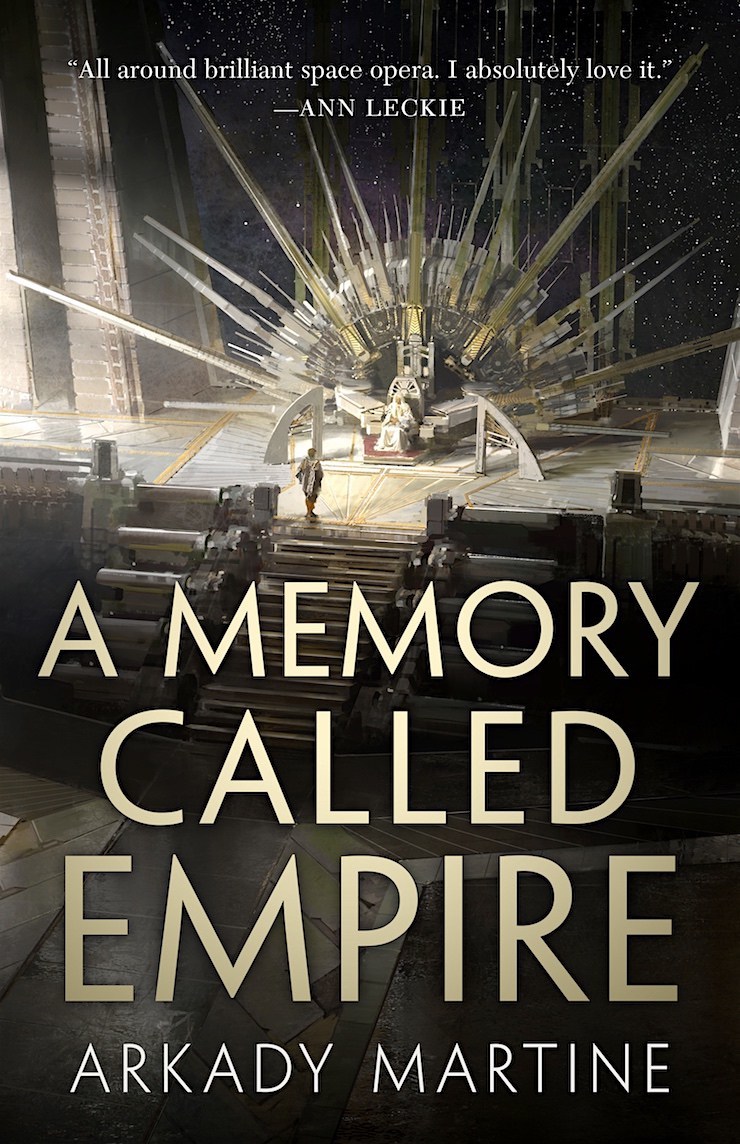
This has been on my radar since it won the Hugo. After it got a starring role in the recent season of the ‘Writing Excuses’ podcast, I decided to pick it up. I am happy I did, because this is one of the best books I’ve read in recent years. It’s not perfect, I wasn’t really feeling the romance and the characters were a bit lacking. But the Greco-Aztec worldbuilding was great seasoning, and the meat-and-potatoes of the imago personhood technology gave my brain something to chew on. I thought the author did a clever job setting a spy story in an explicitly Byzantine setting, while using the imago technology to set up good twists and turns. This was an overall lovely read.
Spoilers Below. I’m writing this review in good faith, as one author reviewing another’s book, trying to balance positives with negatives.
Before we begin, do you have a book which needs editing? Do you want to read more reviews? Here is a link: The Rest of My In Depth Reviews
WHAT IS THE TARGET AUDIENCE? WHAT GENRES? WHAT MAJOR TROPES?
- Byzantine Roman
- Aztec Empire
- Postcolonial
- High-Concept Sci-Fi
- Queer
- Poetry and diplomacy
- Spies and secrets and murder
- Solving your own murder mystery
- 16+ year old readers
MY EMOTIONAL RESPONSE/ FUN FACTOR
So I was always going to be inclined to enjoy this book. Last year I read a few books about the Byzantine Empire. This book wears it’s Byzantine inspiration pretty clearly on it’s sleeve. Likewise, I’m a fan of DeBodard’s ‘Obsidian and Blood’ Aztec mystery series. And I enjoy high-concept sci-fi, even though I never actively seek it out.
I’ve recently gotten in the habit of not giving books star rankings until the end of the year, but in this case I feel safe predicting this will be 5 stars.
WARNING! QUIT READING NOW UNTIL YOU FINISH READING THE BOOK!
CONCEPT AND EXECUTION
The ambassador of a backwater spacestation was assassinated in the Teixcalaanli empire. Mahit, a junior officer, is sent to replace him, with a 15-year-out-of-date ai copy of the previous ambassador for backup. Teixcalaan is a highly militaristic, highly cultured society, devoted to spreading it’s ‘superior’ culture among the stars by any means necessary, be it war or poetry. It’s up to Mahit to stop them, and she has only her wits to make it happen.
I liked how the author portrayed the setting. The Teixcalaan are a warlike people, but their armies are not the only reason why they’re powerful. Have you ever played a game like ‘Civilization?’ One of the victory conditions is a ‘culture’ victory, where you take over the world by gaining a hegemony in terms of having your culture become dominant over everyone else. Teixcalaan not only make you join the empire by force, but by peace as well. Their art and poetry are just so cool that nearby human worlds are envious. (Soft Power vs Hard Power)
This is the second book I’ve read where the author does a great job ‘showing, not telling’ the idea of ‘voluntary’ cultural assimilation. (The other being ‘The Traitor Baru Cormorant.) Teixcalaan uses it’s overwhelming social cache to woo and impress barbarians from the outer worlds. Their art, their movies, their poetry. Throughout this book, Mahit can’t help but be enthralled by how cool everything about Teixcalaan is, even as Mahit struggles to prevent Teixcalaan from invading her space station militarily. Characters back on the space station HATE Teixcalaan for how they are cultural exporters, how the younger generations are forgetting the traditional languages. It makes for fantastic culture clash. (BTW, this forgetting of traditional languages is happening in many places today because of TV and the internet homogenizing world media.)
CHARACTERS, CHARACTERIZATION AND DIALOG
Mahit is a weeb. In anime culture, an ‘weeb’ is someone so fascinated with anime and Japanese culture that they lose touch with reality. In Mahit’s case, she’s a weeb for the Teixcalaan. Mahit isn’t the only one. Several other ‘barbarian’ characters are so desperate to assimilate that they make accidental ‘weeb’ mistakes. For example, normal Teixcalaanli names include ‘Three Seagrass’ and ‘Six Directions.’ A weeb barbarian named himself ‘Thirty-Six All Terrain Tundra Vehicle’ because he didn’t know it was in poor taste.
Mahit grew up lightyears outside the empire, so she doesn’t really know what it’s like living in the empire; she’s only learned by tv and movies and poetry. When she arrives, she’s in for a harsh lesson. She’s almost assassinated. In Teixcalaanli, when you’re writing poetry, the word for ‘bomb’ is ‘fire flower.’ This is not the Teixcalaan in the soap operas she watched at home.
I found Mahit endearing for her anxiety. She’s is VERY MUCH SO a fish out of water, struggling to make sense of the differences between the Teixcalaan of her mind and the one of reality. But she must learn fast, because that was only the first assassination attempt against her.
I struggle in ascribing much other personality to Mahit. I don’t know who her family were back on the station. Did she have parents? Siblings? What are her hobbies, besides reading poetry? She was a compelling character, but not ultra-deep.
I wanted more from Yskandr, her imago ghost ai. He should have been the other main character, but because Mahit’s implant was on the fritz for most of the book we barely got anything of Yskander. The narrative could have used Yskander as a medium to explore imago technology from the perspective of the ghost in the machine. When we finally got Yskander I loved him, but I wanted more of him. As a result, the ‘imago’ concept feels as though it wasn’t sufficiently explored.
(Part of my problem is that I’m a fan of Bujold’s ‘Penric and Desdemona’ books, and the imago technology in this is the exact same thing as the demons in that series. Desdemona is an infinitely more fascinating character than Yskandr.)
I struggle with most of the other characters. The problem, I think, is that this is a spycraft novel. The author deliberately set out to write a byzantine (aka intricate, cryptic) style mystery. Characters in this book have schemes, hidden loyalties, and enigmatic motivations. As a result, all the characters hide their emotions and try not to reveal their secrets. Even if it was appropriate for this plot-style for this novel, I wanted more from the characters. The bad guys were so obscured they basically got no characterization, besides a bare pittance of dialogue.
That said, 19 Adze grew on me by the end of the story, as did 6 Directions. 3 Seagrass eventually became a fascinating character, near the end when she wrote a poem to end all poems. But I didn’t really feel Mahit’s romance with 3 Seagrass: they felt like really good friends instead of romantic partners.
PACING AND STRUCTURE
I’m going to use the 7 Act Structure to analyze this story.
- Hook/Status Quo
- The book begins with Mahit going to Teixcalaan after her space station recieves the mysterious message ‘send a new ambassador.’ Mahit doesn’t even know what happened to the prior ambassador, Yskander. Before she leaves, she has an imago of Yskander implanted into her brain, but the imago is 15 years out of date.
- Plot Turn 1/Inciting Incident
- They go to the morgue, and find Yskander’s body. The imago of Yskander freaks out seeing his own body, and he disconnects from Mahit. Now all alone in a foreign and hostile empire, Mahit feels doomed.
- Pinch 1/Protagonist Acts 1
- Someone tries to kill Mahit by bombing her. Mahit doesn’t know who attacked her, or even if the attack was aimed at her.
- Seeing no other recourse, she takes refuge with Nineteen Adze.
- Midpoint Confrontation
- Nineteen Adze helps Mahit meet the Emperor, Six Directions. We have the reveal that the now-dead Yskander and Emperor Six Directions made a deal:
- Six Directions would prevent an attack upon Mahit’s space station by the Teixcalaanli army, and in exchange Yskander would provide Six Directions with an imago device. Six Directions plans on using the imago to live forever, and thus rule Teixcalaan forever.
- It logically follows that Yskander was killed to prevent the deal from happening. One of the three people who plan on succeeding Six Directions to become Emperor are the chief suspects. Succession crisis!
- Nineteen Adze helps Mahit meet the Emperor, Six Directions. We have the reveal that the now-dead Yskander and Emperor Six Directions made a deal:
- Pinch 2/ Protagonist Acts 2
- Protagonist confronts Pearl. He confesses that he killed Yskander to make the deal fall through. As Pearl runs the Science faction, and Science has an alliance with One Lightning’s military faction, it follows that One Lightning was the person who assassinated Yskander.
- Plot Turn 2/ Relief and Respite
- Mahit recieves a coded message from back home. She can’t translate it without the passwords in Yskander’s brain. With her imago on the fritz, she has no choice but to dissect the dead Yskander’s body and take his imago. She goes to a black market cybernetics doctor and has the dead guy’s imago implanted into her brain.
- Mahit suddenly has Yskander in her brain again, only this time it was the up-to-date version. They translate the message: aliens are invading the space station.
- Resolution/Climax and Denouement
- While she’s unconscious, two coups take place. One Lightning’s military coup begins, and in response Thirty Larkspur also begins his separate coup. Meanwhile, the ancient Emperor Six Directions lays dying.
- Mahit & Friends are captured by Thirty Larkspur. To escape, Mahit & Friends write really good poetry. The poetry is so good it goes viral, tipping off Nineteen Adze to their location. Nineteen Adze saves their lives, but only after Petal dies.
- Mahit passes along the message that aliens are invading the space station, and will soon also invade Teixcalaan. Six Directions uses the oncoming alien invasion as a rallying cry to unite the warring factions. To drive the point home, Six Directions kills himself in traditional Aztec human sacrifice fashion to make official the succession of Nineteen Adze to the throne.
- The civil war ends, and Mahit’s side wins. The space station is safe.
I’m missing a few important plot beats here, such as the white-flower poisoning and the needle-stabbing by 11 Conifer and the poetry party, but I think this is mostly correct.
Pacing wise, I think this book is flawed. I think the book had a slow start for the first half. I was personally only enthralled after the midpoint climax, with the revelations of:
- Yskander sold out Lsel station by offering it’s immortality imago technology to the emperor
- that the Empire was on the verge of a VERY MESSY succession crisis, with One Lightning, Thirty Larkspur and the immortal 6 Directions all struggling for the throne at once.
The revelation of the Emperor and Yskander’s deal helps the reader understand the previous assassination attempt(s). As a result, the first half of the book was confusing, because Mahit felt like a leaf on the wind, floating from one storybeat to another, without agency of her own. A lot of the political chicanery which take place in the first half of the book doesn’t make sense until the added context of the deal.
- One Lightning’s desire to attack Lsel station doesn’t make sense, until the reader gains the added understanding of One Lightning wants to prevent the emperor becoming immortal. If the emperor becomes immortal, One Lightning will never become the emperor himself. One Lightning probably figures that by destroying Lsel station, he can destroy imago technology, and thus prevent the emperor from gaining immortality.
- The same is true for Thirty Larkspur. Larkspur tries to poison Mahit with a flower because he wants to prevent the emperor from becoming immortal so Larkspur can become the emperor himself.
Only after Mahit gains this information is she finally able to put together the pieces and start scheming for herself. She’s passive for the first half of the book, and becomes active in the second half. That is the source of the roughness in the first half of the book.
PLOT, STAKES AND TENSION
If I were to critique this book, I’d say that the stakes and tension could have been tighter.
The book does very little to introduce Mahit’s people. This book is explicitly about the colonization and cultural erasure of Mahit’s people; not having their culture being a focus of the story felt weird. If their culture is so important to preserve, why not feature it more in the story? We see a few of their traditions (like eating the ashes of the dead, and imago technology), but nothing more.
I mention this here because I need to know why we should care about Lsel station. We never see Lsel station. We don’t know why we should love it. Lsel is a grand enigma. As a result, the stakes felt low. I just don’t care about Lsel because I never saw it.
Ditto for the tension. I felt more tense on behalf of the fates of the individual characters as opposed to tense on behalf of the fate of Lsel station. Ideally, this book would have made me invested in the stakes of BOTH Lsel station as well as the characters. And as the characters weren’t fantastic, it suffered there too. Suffice it to say, if you read this book and just didn’t care about any of it, I can’t blame you. This book didn’t do a good enough job selling the stakes and tension.
AUTHORIAL VOICE (TONE, PROSE AND THEME)
This book is about empire, and cultural erasure. I really enjoyed it, I thought the author had a new take. By focusing on how empires wield both Hard power and Soft power, Martine successfully show how an invasion can take place long before the warships show up. Mahit loves Teixcalaan for it’s art and culture, but she also fears it because they are expansionist and her home is on their border.
Mahit would love it if Teixcalaan were to suddenly become peaceful, but Teixcalaan can’t become peaceful. I’m pretty sure that if Teixcalaan were to stop invading places, the warring factions in the empire would turn on one another for lack of other enemies. I think that’s what Martine is going to do here. Teixcalaan is ancient and glorious, but nothing lasts forever.
I enjoy the author’s use of poetry. It helps add an air of sophistication to the Teixcalaanli. I liked how the author used the poetry competitions to add foreshadowing to oncoming events. For example, early on a character uses subtext hidden in a poem to hint that an invasion is coming. Upon hearing this poem, Mahit finally realizes her home is in danger.
And I like the prose and wordplay! At one point the characters must steal an imago machine, upon which a human mind is copied. One character asks something like: “If we’re caught, is this technically kidnapping?” And another character jokes: “No, it’s plagiarism!” The book isn’t afraid of having fun with the prose.
SETTING, WORLDBUILDING AND ORIGINALITY
I’ll start with what I enjoyed about this book. It’s worldbuilding was magnificent. It successfully combined Aztec inspired bits of worldbuilding (human sacrifice, an unusual naming scheme, a theme of hummingbirds and flowers) with Greco-Roman inspired worldbuilding (legions, gaining imperium by acclamation, having a very flashy throne). The author very clearly picked bits from history and dropped them on the page. As a result, the setting felt both familiar and foreign. I liked how the author used Mahit as the lens to view Teixcalaan; as she’s a foreigner, she views Teixcalaan as exotic and amazing and terrifying. She was a good lens for the book.
When you’re dealing with tropes like human sacrifice and the deliberate use of exoticism, an author runs the risk of tokenizing real world cultures. I feel like Martine was successful in preventing that tokenization. The Teixcalaan’s unusual traditions were portrayed sympathetically, in the context of Teixcalaan.
I really liked the use of cybernetics, and how it interacts with culture. Both Mahit’s space station and the Teixcalaan use cybernetics, but where Mahit’s people use it to modify their own brains and replace lost limbs, Teixcalaan view all such cybernetics as ‘cheating and unnatural.’ The Teixcalaan use cybernetics to create a loyal, algorithmically driven police force. I liked how the author presented neither side as being wholly right or wrong.
While speaking of the algorithm, I also really liked how the city-ai for Teixcalaan was used as a plot point. Due to intrigue and conspiracy in the government, the algorithms had been meddled with and were constantly on the fritz throughout the story. The protagonists never knew which side the city-ai would fall on, as the different coup attempts tried to hack and gain control of the city-ai. I especially liked how the protagonists were able to avoid getting arrested at one point by feeding the police algorithms slanted information to change statistically-determined outcomes. It gave that whole plot point an organic, realistic edge.
This book focuses mainly on the lives of the rich and famous, and not the lives of ordinary Teixcalaan people. What is it like for normal people in the empire? Is this an oppressive empire, or a progressive one for the peasants? We get hints of it here and there, when we meet the black market doctor, but largely the narrative focuses on kings and diplomats.
The Empire feels vaguely small. We’re only really told about the Teixcalaan capitol city-planet and Lsel station. The Empire contains hundreds if not thousands of planets, but none of them come up for more than a very brief mention. I would have liked if the author did a Roman Tetrarchy thing, where the empire is separated into quadrants just to make it manageable, or something similar. That would have added a texture of how big and unwieldly the Teixcalaanli state actually is.
And finally, SHOW DON’T TELL. A lot of the exposition in this book about Teixcalaan and Lsel and imagos took the form of pure infodumps. I found it to be compelling infodumps, but they’re still infodumps.
AUDIOBOOK NOTES
Good audiobook.
LESSONS LEARNED
As an author, I want to improve my own writing/editing skills. To that end, I like to learn lessons from every story I read. Here’s what I learned from this story:
- Play around with perspective. This book did a good job of showing a character become disillusioned with a culture they grew up loving from afar. The texture of Mahit as a person changes as she learns and grows more confident.
- Culture clash! Teixcalaan and Lsel station view cybernetics differently. Teixcalaan think of them as cheating, but Lsel views them as indispensable. Teixcalaan has what amounts to high-tech VR glasses which are basically cybernetics you wear outside of your body, but doesn’t view that as cheating. It’s really fascinating how two people can view the same thing differently.
Here’s a link to all the lessons I’ve previously learned.
SUMMARY
Fantastic book, but it is flawed. I’d give it 5 stars for enjoyment, but I can’t look aside when I see pacing issues and exposition issues like this one has. Highly recommended for most readers, but it won’t be a book for everyone.

 John Mendez- Book Reviews and More