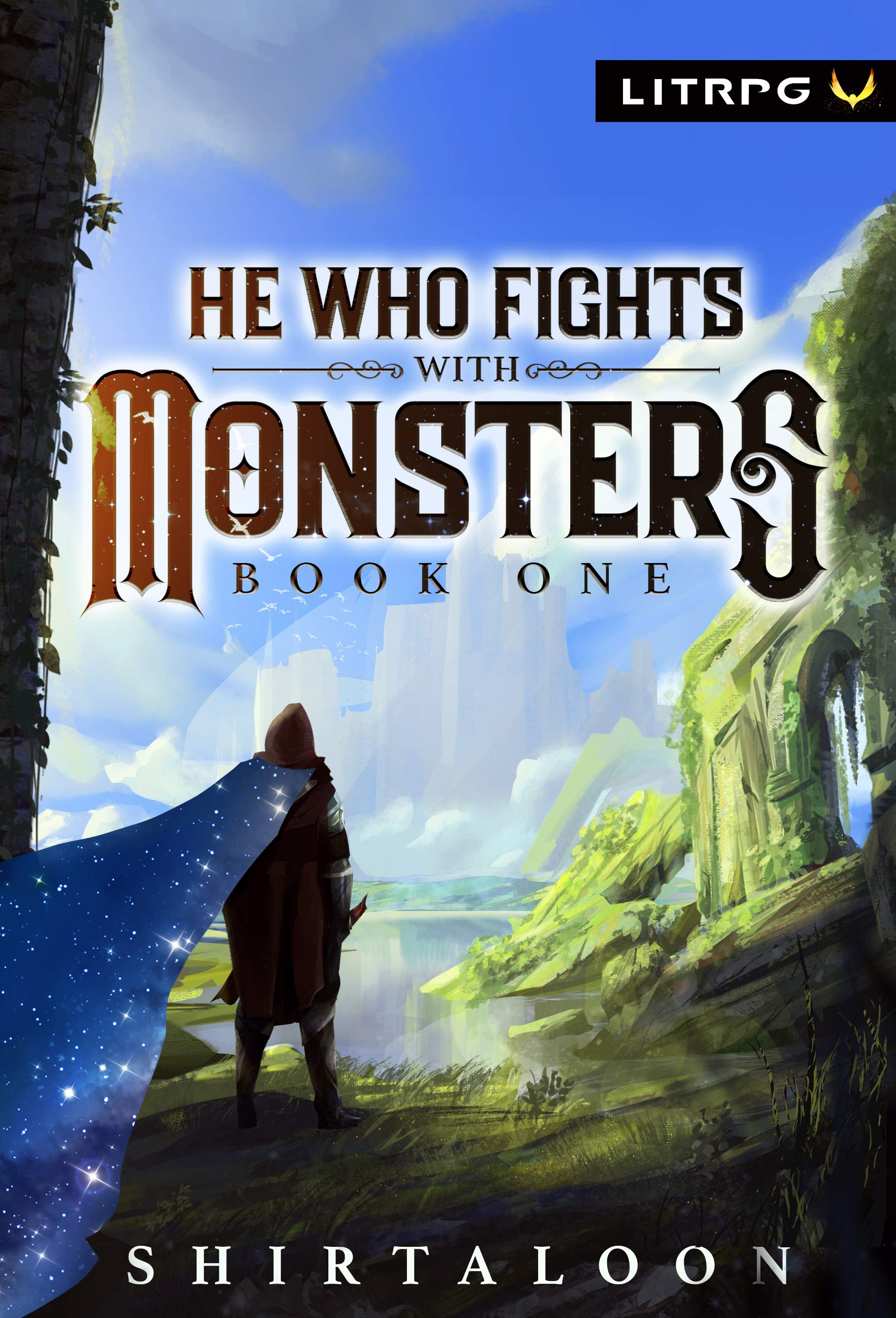
This novel is about an Australian everyman who is summoned across time and space to Fantasylandia, where he becomes a professional adventurer. The world is a classic LitRPG, with stats, numbers, skillups and spells. Jason the protagonist fights off endless waves of continually spawning monsters, heals the sick, and goes on proletariat ranting against the aristocracy of the setting.
I really enjoyed this one, and think I’ll read more in this series. However, I feel it had flaws. The Fantasylandia setting felt a bit generic, and does very little to add a lived-in uniqueness to the setting.
I didn’t like how the guilds were literally called the ‘Adventurer’s Society,’ ‘Magic Society’ and ‘Healer’s Society,’ while the gods were ‘Healer’ and ‘Dominion’ and ‘Hero.’ I understand that the author was trying to make them all sound archetypical and thus powerful… however, I was left feeling like the setting didn’t have any dirt under it’s fingernails. Why not name them ‘The Archon of Dominion,’ ‘The Muse of Healing’ and ‘The Vigilant Hero?’ You know, something with a bit of spice? Similarly, I didn’t like how many of the characters native to this fantasy setting had names like ‘Rebecca’ and ‘Derek;’ such normal names didn’t seem to fit in with the magical setting. The setting needed more spice. I’m not demanding a curry here, but something more than salt and pepper please.
Going into this, I was warned that Jason can be an annoying protagonist due to the fact that he’s constantly bickering with every aristocrat and corrupt government official he comes across. Now that I’ve read the book, I can understand why people had that problem; it can come across as preachy. Going back to the flaw of the setting not feeling lived-in, some of the antagonists Jason railed again were too strawman-y. The evil guys were evil, the good guys were good. I couldn’t help but roll my eyes at how ‘Freshmen Sociology 101’ the book felt.
SPOILERS:
In the novel, the Healer Society is a corrupt organization which withholds healing magic for corrupt reasons. At one point the heroes confront them for their villainy. And to win the fight, the god of healing literally comes down and swats down the villains in an act of literal deus-ex-machina. I was left thinking, ‘Hey, god? Why didn’t you hop down and smite these guys years ago when they first started causing problems? Why did you wait until a narratively appropriate moment?’ In the end, the moment didn’t feel earned.
Setting aside the fact that most people agree that deus-ex-machinas are a bad storytelling technique, I’ll address the issue from the novel’s own subjective atheistic perspective. A major theme of the story is that ‘religions are prone to abuse and secular oversight is needed to reform them.’ Having a literally holy figure come down and resolve the plotline felt… not what the book was aiming for. Why not have a secular figure address the problem?
END SPOILERS
I feel like I’m coming off a little harsh. I happen to agree with the message the book was saying. At other times, I was pleasantly impressed. While I can’t quite put this on the level of Pratchett’s thoughtful worldbuilding, I can respect that the author actually swung for the fences when it actually came to addressing his themes. I particularly enjoyed the sub-blot involving the bear monster.
SPOILERS:
There’s a farmer whose forced to close his farm due to a wandering bear monster. However, whenever an adventurer swings by to kill it, the monster is already gone. As it turns out, the monster is a summoned creature a neighboring farmer is using to scare the victim farmer out of business, so he can buy up the land. To solve this problem, Jason has to cut his way through an entangling mess of bureaucracy which is protecting the aristocrats behind the issue. That was a good, non-strawman way to show-don’t-tell how authoritarians can abuse the legal system and use obscured shows of force to disenfranchise the weak without having to resort to violence.
END SPOILERS
I also liked the overlapping layers of political scheming between the three Crime Lords, the Magic Society, the Adventurers Society and the Aristocratic families. I thought it was well written in terms of character motivations, with some twists I didn’t expect along the way.
I’ll read more at some point. I give it 3.75 out of 5 stars, but for the sake of generosity I’ll round up to 4.
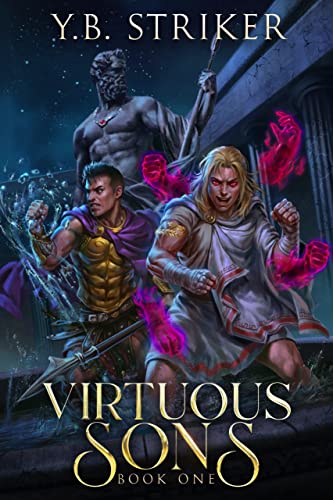
This is a Greco-Roman Progression Fantasy. The two protagonists are Lio and Solus; Lio is the powerful son of a local demigod, and heir to a powerful Greek city-state, while Solus is a Roman Legionnaire who lost a war and was sold into slavery by Carthage. After Solus is sold to Lio’s family, they strike up an unlikely friendship, free each other of their chains to family and slave-owners, and proceed to go on adventures together around a magic-infused ancient Greece.
This series answers the question of ‘what if Ancient Greek Mystery cults were taoist Progression Fantasy cultivators?’ I really enjoyed it. I feel it arguably has the best prose of anything I’ve read in this genre. I finished book one and will definitely pick up the rest of the series at some point. The novel is not on Kindle Unlimited, so I bought it; I do not regret my purchase.
If I were to point out one ‘fault’ in this novel is that I expected more fighting. This is a xianxia-inspired progression fantasy, a genre of novels famous for fighting heroes and monsters. I wanted more monster fights, perhaps against a minotaur or cyclopes or medusa. Due to the lack of action, there were moments where I put the book down for weeks at a time. This novel is slow paced.
In any case, I highly recommend this one. I’ll give it 4 out of 5 stars, where 3 is my default for good books.
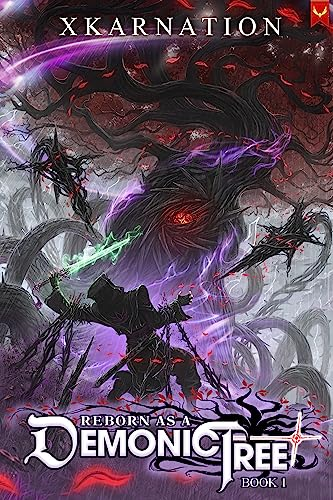
This is a xianxia/litRPG/progression fantasy novel starring an isekai human who dies on Earth and is reborn as an evil, flesh-eating tree trapped in an evil xianxia cultivation world. He’s reborn into a ‘weak spec,’ unable to defend himself against the titanically powerful old monsters and young masters who stalk this Chinese-inspired setting. His ultimate goal is to grow from a pitiful sapling to become a world-dominating World Tree, choking out all the light from the world and devouring everyone with his mummifying roots. Aka, some good old anti-villain, pulpy fun, but starring a weird tree protagonist.
After I heard the premise of the novel, and saw the dope cover, I knew I wanted to read it.
So far, I’ve only read around the first ~130 pages. I’m DNF-ing this one, for at least the time being. This is the sort of novel you need to be in the right mood for; I’m not in the right mood for it now, but I might be one day in the future. I had two major quibbles.
I’ll start with the big one. The protagonist is a tree. As a result, he lacks agency in the events of the story. He can’t fight very well, so he mostly gets by by bribing people with magic fruit. He also can’t speak to the people around him (yet), so there no interchange of dialog.
I enjoyed the concept of the novel enough that I think I would have finished reading the book if the book had dialog. Having the tree bargain, trading fruits for favors, trying to prevent being chopped down by begging, would have entertained me a great deal. NOW THAT SAID, I think the novel is foreshadowing that Mr. Evil Tree will gain the ability to speak with people at some point via zombifying puppet corpses, so if you’re hesitating on reading the book, know that the no-dialog problem might get fixed.
Second, I prefer to read progression fantasy where the protagonist grows slowly powerful. Because Mr Evil Tree is… you know… a tree, I expected the power progression in this novel to be slow. That’s not the case. By page 130 of book 1, he already has a Core. (If you’re not familiar with the xianxia genre, a core is a fairly advanced stage of progression. Using ‘Cradle’ as reference point, Lindon gets his Blackfire core in book 3. In ‘A Thousand Li,’ Wu Ying gets his core in book 7.)
I think I’ll come back later to finish this book, when I’m in the mood for some light-weight, fast-paced evil-tree adventures. I’ll definitely check out the author’s next story/series; I think the author’s showing promise. Overall I can recommend this novel, even if it’s not for me.